Nonprofits today rely on a growing ecosystem of cloud tools to power their missions.
From Microsoft 365 and Google Workspace to Salesforce, QuickBooks Online, donor platforms, volunteer management systems, and file-sharing apps, using multiple cloud platforms is not only common but often necessary. And while cloud tools increase flexibility and collaboration, they also introduce complexity. When your data resides in multiple systems, maintaining alignment, security, and compliance requires deliberate effort.
So what does compliance really mean for nonprofits operating in a multi-cloud world?
Compliance Is More Than Just Security
What comes to mind when you think about compliance? It's common to hear “compliance” and immediately think of cybersecurity, and while security is a part of it, compliance is actually a lot broader.
For nonprofits, compliance means: 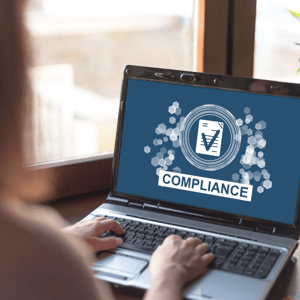
-
Protecting donor, client, volunteer, and employee data
-
Following legal and regulatory requirements (ex. state privacy laws or HIPAA, if applicable)
-
Meeting contractual obligations with funders or partners
-
Demonstrating responsible stewardship of sensitive information
-
Maintaining internal accountability and documentation
In a multi-cloud environment, compliance is about understanding where your data lives, who can access it, and how it is being protected across all systems.
The Hidden Risk of “Data Sprawl”
When technology adoption happens organically over time, complexity can quietly build beneath the surface.
As nonprofits adopt new tools consistently, data often becomes fragmented:
-
Donor information lives in a CRM
-
Financial data lives in accounting software
-
Program data lives in spreadsheets
-
HR files live in shared drives
-
Conversations happen in email and chat platforms
Without clear oversight, this can create “data sprawl,” a term used to describe the rapid and uncontrolled proliferation of data across multiple locations, systems, and devices. Data sprawl makes it difficult to track, manage, and secure information across your cloud environment, which in turn creates compliance issues.
This is where risk increases. Not necessarily because cloud tools are unsafe, most major platforms are highly secure, but because responsibility becomes unclear. When data “mushrooms and scatters” across environments without governance, it amplifies management challenges and security risks.
Questions organizations must answer include: .png?width=478&height=239&name=Blog-Feb12-47%20(1).png)
Compliance starts with answering those questions to assess your next steps.
Shared Responsibility in the Cloud
One of the most misunderstood aspects of cloud platforms is the shared responsibility model. Your cloud provider is responsible for securing the infrastructure.
But your nonprofit is responsible for:
-
Managing user access and permissions
-
Configuring security settings correctly
-
Creating and enforcing data retention policies
-
Training staff on safe practices
-
Monitoring and responding to potential incidents
Using multiple cloud platforms means managing multiple sets of settings, permissions, and configurations. Without intentional oversight, gaps can form between systems, ultimately weakening your cybersecurity.
What Strong Multi-Cloud Compliance Looks Like
Sometimes, consistently focusing on cybersecurity best practices is all it takes. For nonprofits, compliance doesn’t require a massive IT department; it requires clarity and consistency.
Strong multi-cloud compliance typically includes:
-
Clear Ownership
Assign internal responsibility for each platform. Someone should be accountable for reviewing settings, permissions, and vendor agreements.
-
Access Management
Regularly audit who has access to what. Remove former employees promptly and apply the principle of least privilege.
-
Written Policies
Document how data is stored, shared, retained, and deleted. Policies shouldn’t be complicated; the objective is to make them easy for everyone to follow.
-
Vendor Due Diligence
Understand the compliance certifications and security standards of your cloud vendors. Keep records of agreements and data processing terms, you might need them one day.
-
Ongoing Monitoring
Compliance is not a one-time setup. Schedule periodic reviews of tools, integrations, and risk exposure.
Compliance as Mission Protection
We’ve said it once (or a lot more than once), and we’ll say it again: compliance and trust are one and the same.
Donors trust you with their financial information, clients trust you with personal details, and staff trust you with their employment records. So compliance is key! When data is spread across multiple cloud tools, protecting that trust requires thoughtful coordination across the board. By understanding where your data lives, clarifying responsibilities, and managing risk proactively, nonprofits can confidently leverage the power of multiple cloud platforms without sacrificing accountability.

Technology should enable your mission, not create uncertainty. With the right structure in place, compliance becomes less about fear and more about stewardship.
Cloud tools are powerful, but compliance requires intention.
Ready to take the next step?
Data risk and compliance challenges are evolving, but your nonprofit doesn’t have to navigate them alone. Schedule a brief discovery call to learn how RoundTable can help you align your cloud systems, clarify responsibilities, and protect the information that matters most.
Your mission deserves technology that works securely and responsibly behind the scenes!

.png?width=400&height=111&name=logo-roundtable-r2%20(1).png "logo-roundtable-r2 (1)")
 Korrin Wheeler

.jpg?width=30&name=justin-brown-headshot-professional%20(1).jpg) Justin Brown : Nov 8, 2023 11:10:01 AM
Justin Brown : Nov 8, 2023 11:10:01 AM
.png)